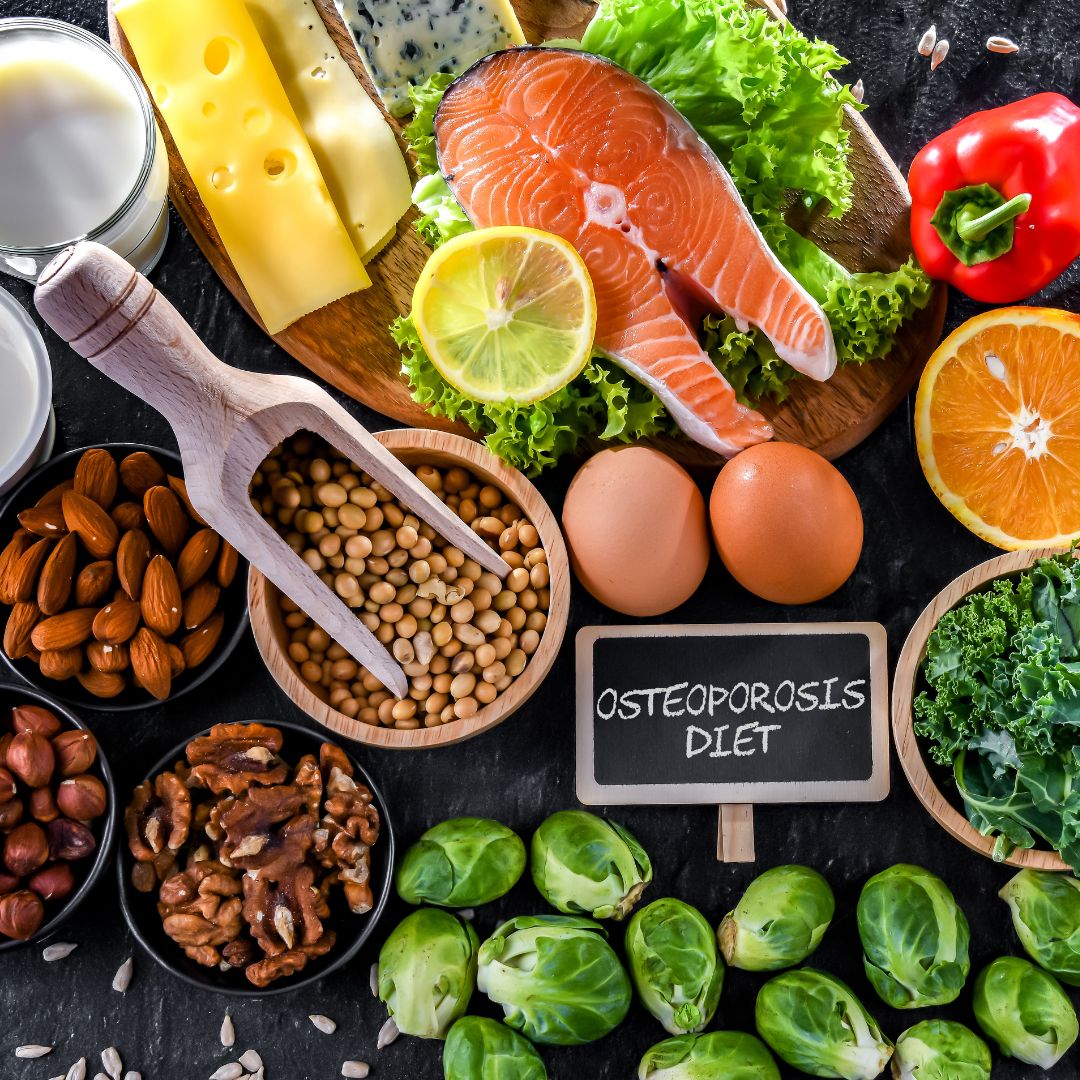
Eating for Stronger Bones
Many people start thinking about bone health when they reach midlife. Maybe a parent has been diagnosed with osteoporosis, or maybe joint stiffness and aches are becoming a bit more noticeable. This can often lead to questions about diet, calcium intake and whether supplements might be necessary – but it can be confusing.
What many of us don’t realise is that bone health is influenced by the choices we make over many years. Bones are living tissue that constantly renew themselves, so therefore the nutrients we eat, the way we move our bodies, and our overall lifestyle all influence how strong our bones remain as we age.
While bone density naturally changes over time, research shows that diet and lifestyle can really help support bone strength and reduce the risk of fractures. Supporting bone health is therefore not just something to think about later in life. It is something that can be supported at every age.
How Bone Health Changes Over Time
Our bones are continually being broken down and rebuilt through a process called bone remodelling. During childhood and adolescence this process works in our favour, as bone formation happens faster than bone breakdown. This allows us to build strong bones and reach peak bone mass, usually by our late twenties.
After this point, the balance gradually begins to shift. Bone breakdown slowly starts to exceed bone formation, meaning bone density gradually declines with age.
For women, this change can become more pronounced after menopause. Oestrogen helps maintain bone density, and when levels fall during menopause the rate of bone loss can increase. This is one reason why women are more likely to develop osteoporosis later in life.
However, bone health is not determined by hormones alone - nutrition, physical activity and lifestyle habits all influence it. Studies consistently show that dietary patterns rich in essential nutrients can support bone strength and help reduce the risk of fractures as we age.
Nutrients That Support Bone Strength
When people think about nutrition for osteoporosis prevention, calcium is usually the first nutrient that springs to mind. Calcium is indeed a key component of bone structure, but healthy bones rely on a range of nutrients working together.
Rather than focusing on a single nutrient, it is more helpful to think about overall dietary patterns that support bone health.
Calcium, Vitamin D, Protein and More
Calcium contributes to the maintenance of normal bones and is an important part of osteoporosis prevention nutrition. Adults in the UK generally need around 700 mg of calcium per day.
Calcium can be found in a variety of foods including:
Vitamin D is another essential nutrient because it helps the body absorb calcium effectively. In the UK, sunlight is the main source during spring and summer months. During autumn and winter, dietary sources such as oily fish and eggs become more important, and public health guidance recommends vitamin D supplementation for many adults.
Protein also plays a huge role in maintaining bone structure, as bones contain a protein framework that gives them flexibility and strength. Adequate protein intake supports both bone and muscle health, which is important for maintaining balance and reducing the risk of falls. Research shows that improving both protein and calcium intake in older adults can help reduce the risk of falls and fractures, particularly where dietary intake has previously been low.
Other nutrients that support bone health include magnesium, vitamin K and zinc. These nutrients are found in whole foods such as nuts, seeds, legumes, vegetables and whole grains. Increasing vegetable intake may also benefit musculoskeletal health. Green leafy vegetables are a great source of vitamin K and other plant compounds that may support both bone metabolism and muscle function.
A varied, balanced diet is one of the most effective strategies for supporting bone health.
Common Bone Health Myths
There are several common misconceptions about osteoporosis prevention nutrition.
One myth is that dairy products are the only way to obtain enough calcium. While dairy foods are a convenient source, as we saw above, calcium can also be obtained from plant foods, fortified products, nuts and seeds.
Another misconception is that bone health only becomes important later in life. In reality, the foundations for strong bones are actually laid early in life and maintained through adulthood.
Finally, it is a myth that supplements alone can prevent osteoporosis. While supplements may be useful in some situations, they are not a substitute for a balanced diet and healthy lifestyle.
Nutrition also works alongside other important factors including regular weight-bearing exercise, strength training, maintaining a healthy body weight and avoiding smoking.
A Whole Diet Approach to Osteoporosis Prevention Nutrition
When thinking about osteoporosis prevention nutrition, it can be helpful to focus on dietary patterns rather than individual nutrients. Eating a wide range of whole foods provides the combination of vitamins, minerals and protein needed to support bone metabolism.
Simple habits that support bone health include:
These are great habits to support overall health whilst also supporting our bone health.
Frequently Asked Questions About Bone Health Nutrition
Do I need dairy for strong bones?
Not necessarily. Dairy foods can be a convenient source of calcium, but calcium is also available in plant foods such as tofu, fortified plant milks, nuts and leafy greens.
Is it too late to support bone health after menopause?
No. While bone density naturally declines with age, nutrition, exercise and lifestyle changes can still help support bone strength and reduce fracture risk.
Should everyone take calcium supplements?
Not always. Many people can obtain sufficient calcium from food. Supplements may be appropriate in some cases, but this should be discussed with a qualified health professional.
Looking after your bones is a long-term investment in health. Supporting bone strength through balanced nutrition, regular movement and healthy lifestyle habits can help protect bone health throughout life. If you’d like to know more about how nutrition can support bone health, or you’ve had a diagnosis of osteoporosis or osteopenia, why not get in touch? You can book a free call here.

Please get in touch and find out more - I offer a free 30-minute exploratory call.


.png)







Copyright 2026 all rights reserved
Privacy Policy | Cookie Policy
Website by Phuse Media - Web Design Leigh on Sea
Photography by Petra Blacklock Photography

Please feel free to be in touch with our sister clinic which specialises in PCOS
Alex Allan Nutrition is part of the Green Leaf Company (London) Ltd, a limited company registered in England and Wales. Registered number: 10990293
Disclaimer: ‘Please note that nutritional therapy is not medical advice - this should always be sought from your doctor or other medical provider. I aim to work alongside your doctor or GP to provide nutritional and lifestyle advice to support any underlying imbalances.'
