Top Tips: Travel-Friendly Food Swaps for a Healthy Gut
Travel food can be a bit of a lottery. Sometimes you find a lovely little café with fresh food, proper coffee and plenty of delicious options that you can photograph and remember when you get home. Other times, you are standing in an airport queue, tired, hungry and wondering whether lunch is going to be a packet of crisps, a giant muffin or a slightly limp sandwich.
When you have a sensitive gut, this can feel even more difficult. You may be trying to avoid bloating, reflux, constipation, loose stools or blood sugar dips, but you also do not want to turn your holiday into a set of food rules.
The good news is that supporting your gut while travelling does not have to mean packing a suitcase full of chia seeds or refusing every ice cream, pastry or restaurant meal. It is usually about making a few simple swaps that help keep your digestion, energy and appetite steadier.
Think of this as adding a little structure around the edges, so you can enjoy your time away without your gut feeling completely abandoned.
Why Travel Often Disrupts Digestion
Your gut is surprisingly sensitive to routine.
At home, you may eat at fairly similar times, drink from your usual mug, have access to foods you know you tolerate, and move around in a way your body recognises. When you travel, that rhythm changes quickly.
You may skip breakfast to get to the airport, drink more coffee than usual, sit still for hours, snack instead of eating a proper meal, eat later at night, drink less water and have a bit more alcohol, or rely on foods that are lower in fibre and protein. None of this is “bad”, but it can make digestion feel more unpredictable.
For some people, travel leads to constipation because they are moving less, drinking less and ignoring the urge to go. For others, the combination of rich food, alcohol, unfamiliar ingredients, stress and disrupted sleep can trigger bloating, reflux or loose stools.
If you have IBS, this can be even more noticeable. IBS symptoms can be affected by meal timing, stress, caffeine, alcohol, fizzy drinks, fibre type, fat content and individual food triggers. This is why a travel day that looks “not that bad” on paper can still leave you feeling uncomfortable.
The aim is not to eat perfectly. It is to make a few swaps that reduce the overall digestive load.
Practical Swaps for Airports, Hotels and Road Trips
One of the easiest ways to support your gut when travelling is to avoid going into the day underfed and over-caffeinated.
A common travel pattern is coffee at home, coffee at the station, something sweet at the airport, then a long gap before a very large meal. This can leave you tired, wired, bloated and craving more quick energy by the afternoon.
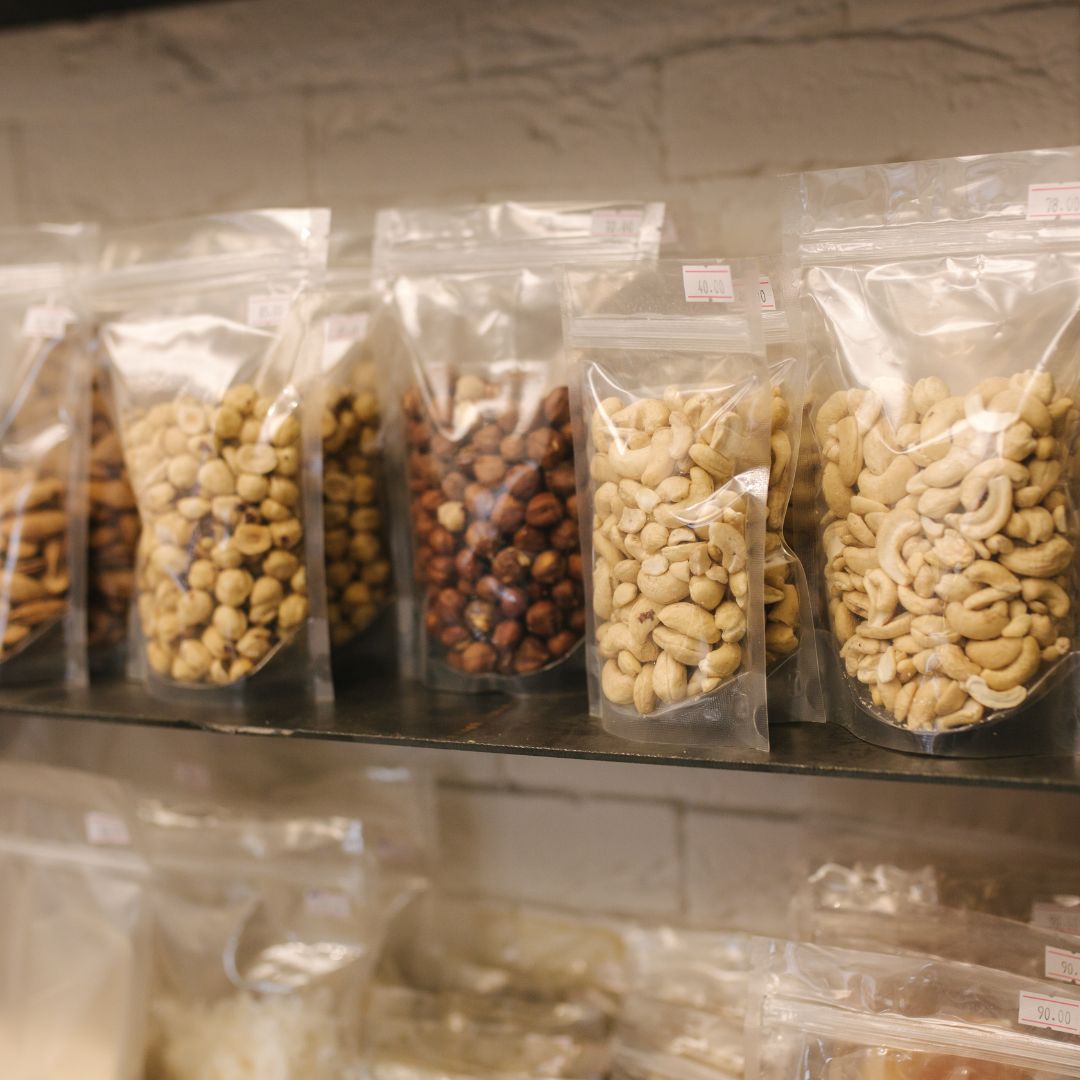
A better swap is to aim for protein earlier in the day. If you are at the airport, look for eggs, Greek yoghurt, smoked salmon, chicken, hummus, cheese, nuts, seeds or a more substantial sandwich or salad with protein.
If you are leaving early, even a quick breakfast at home can help: yoghurt with berries and seeds, eggs on toast, overnight oats with protein, or a smoothie with protein powder if you tolerate it.
If your usual travel choice is a pastry or muffin, you do not need to ban it. But you may feel better if you pair it with something more sustaining. For example, have a croissant with Greek yoghurt or eggs rather than on its own. Have fruit with nuts rather than fruit alone. Choose a sandwich with chicken, tuna, egg or hummus instead of a plain cheese baguette with very little fibre or colour.
At hotel breakfasts, the same principle applies. Start with protein, then add plants and carbohydrates you tolerate. Eggs with tomatoes and mushrooms, yoghurt with berries and seeds, porridge with ground flaxseed, or smoked salmon with sourdough may all be more supportive than a plate made entirely of pastries, juice and coffee.
For road trips, the biggest issue is often convenience food. Service stations are improving, but they still make it very easy to graze on crisps, sweets, chocolate bars and fizzy drinks. These foods are not forbidden, but if they become the whole meal, your gut and energy may not thank you.
A simple road trip swap is to pack one “proper food” option before you leave. That might be a chicken wrap, oatcakes with cheese, a boiled egg pot, hummus with crackers, leftover frittata, yoghurt with berries, or a small cool bag with fruit, nuts and a protein option. You can still stop for coffee or enjoy something fun, but you are not relying entirely on what is available next to the petrol pumps.
Protein and Fibre on the Go
Protein and fibre are two of the most useful travel nutrition anchors.
Protein helps meals feel more satisfying and supports steadier energy. Fibre supports bowel regularity, gut microbiome diversity and stool consistency, although the type and amount of fibre matters if you have IBS or bloating.
The problem is that many travel foods are high in refined carbohydrates but low in protein and fibre. Think pastries, muffins, crisps, sweets, white bread sandwiches, biscuits and sugary drinks. These can be convenient, but they may leave you hungry again quickly or more prone to energy dips. A better approach is to build a “protein plus fibre” habit.
Instead of crisps on their own, try oatcakes with cheese, hummus with crackers, roasted chickpeas if you tolerate legumes, or nuts with fruit.
Instead of a sweet cereal bar, try a simple protein bar with recognisable ingredients, Greek yoghurt with berries, or a small bag of trail mix.
Instead of a white bread sandwich with very little filling, choose one with chicken, tuna, egg, smoked salmon, falafel or hummus, ideally with salad or vegetables.
Instead of fruit juice, choose whole fruit and water. Whole fruit provides fibre and tends to be more filling than juice, which can deliver a lot of sugar quickly and may loosen stools in some people.
If you are prone to bloating, be mindful that more fibre is not always better on a travel day. Suddenly eating lots of raw vegetables, beans, bran bars or dried fruit can make symptoms worse. Soluble fibre is often gentler. Oats, chia, ground flaxseed, berries, peeled fruit, potatoes and carrots may suit some people better than large raw salads or high-bran products.
Smarter Snack Choices for Energy
Snacks can be really useful when travelling, especially if meals are unpredictable. The issue is not snacking itself. The issue is relying on snacks that give you a quick lift, then leave you hungrier, more tired or more bloated an hour later.
A good travel snack usually has at least one of three things: protein, fibre or healthy fats. Even better if it has two.
Some practical options include oatcakes with nut butter, rice cakes with cheese, nuts and fruit, Greek yoghurt, boiled eggs, hummus with crackers, roasted edamame if tolerated, a simple protein bar, biltong, olives, avocado pots, or a small homemade flapjack with oats and seeds.
It is also worth watching the “health halo” snacks. Many bars, protein snacks, vegetable crisps and gluten-free travel foods are marketed as healthy, but may be high in sugar, sweeteners, emulsifiers, polyols or additives that do not suit a sensitive gut. Some sugar-free sweets and bars contain sugar alcohols such as sorbitol, xylitol or maltitol, which can trigger gas, bloating or diarrhoea in people with IBS.
A simple label check can help. Look for a shorter ingredient list, a decent protein or fibre content, and ingredients you recognise. If a product has a long list of syrups, sweeteners, gums, flavourings and claims on the front of the packet, it may not be as gut-friendly as it looks.
Preparing Ahead Without Obsessing
A little planning can make travel much easier, but there is a fine line between being prepared and becoming anxious about food.
The aim is not to pack every meal or avoid all local food. One of the joys of travel is eating differently. But if your gut is sensitive, it can help to take a few familiar options with you, so you are not completely dependent on airports, service stations or hotel buffets.
Before you travel, think about your likely pinch points. Is it the early start? The airport wait? The long car journey? The hotel breakfast? The late dinner? The moment when everyone else wants cocktails and crisps but you have not eaten properly since 10am?
Once you know your weak spot, you can plan around it.
For an early start, prepare breakfast the night before. For a long journey, pack a protein-rich snack and water. For a hotel breakfast, decide in advance that you will start with protein. For a day trip, take something familiar in your bag. For a hot day, keep hydration and electrolytes in mind.
If you are travelling with IBS, SIBO-type symptoms, reflux or a very sensitive gut, it may also help to keep your food choices simpler for the first day or two. Give your body time to adjust before you add in all the rich food, alcohol, late nights and new ingredients at once.
You can still enjoy your holiday. You may just enjoy it more if your gut is not in crisis by day three.
And if your gut is making going away a worry, it doesn’t have to be that way. Why not book in a call to find out more?

Please get in touch and find out more - I offer a free 30-minute exploratory call.


.png)












Copyright 2026 all rights reserved
Privacy Policy | Cookie Policy
Website by Phuse Media - Web Design Leigh on Sea
Photography by Petra Blacklock Photography

Please feel free to be in touch with our sister clinic which specialises in PCOS
Alex Allan Nutrition is part of the Green Leaf Company (London) Ltd, a limited company registered in England and Wales. Registered number: 10990293
Disclaimer: ‘Please note that nutritional therapy is not medical advice - this should always be sought from your doctor or other medical provider. I aim to work alongside your doctor or GP to provide nutritional and lifestyle advice to support any underlying imbalances.'
