DUTCH Testing for Midlife Women
If you are in your 40s or 50s and feel as though your body has changed almost overnight, you are not alone.
You may be sleeping less well, feeling more anxious or irritable, gaining weight around the middle, waking at 3am, craving sugar, struggling with brain fog, or noticing changes to your periods. This is often the point where many women start asking: “Is this my hormones?”
The answer is: quite possibly. But hormones do not work in isolation. They are influenced by blood sugar balance, stress, sleep, gut health, liver function, inflammation, alcohol intake, exercise, nutrient status, and the natural hormonal shifts of perimenopause and menopause.
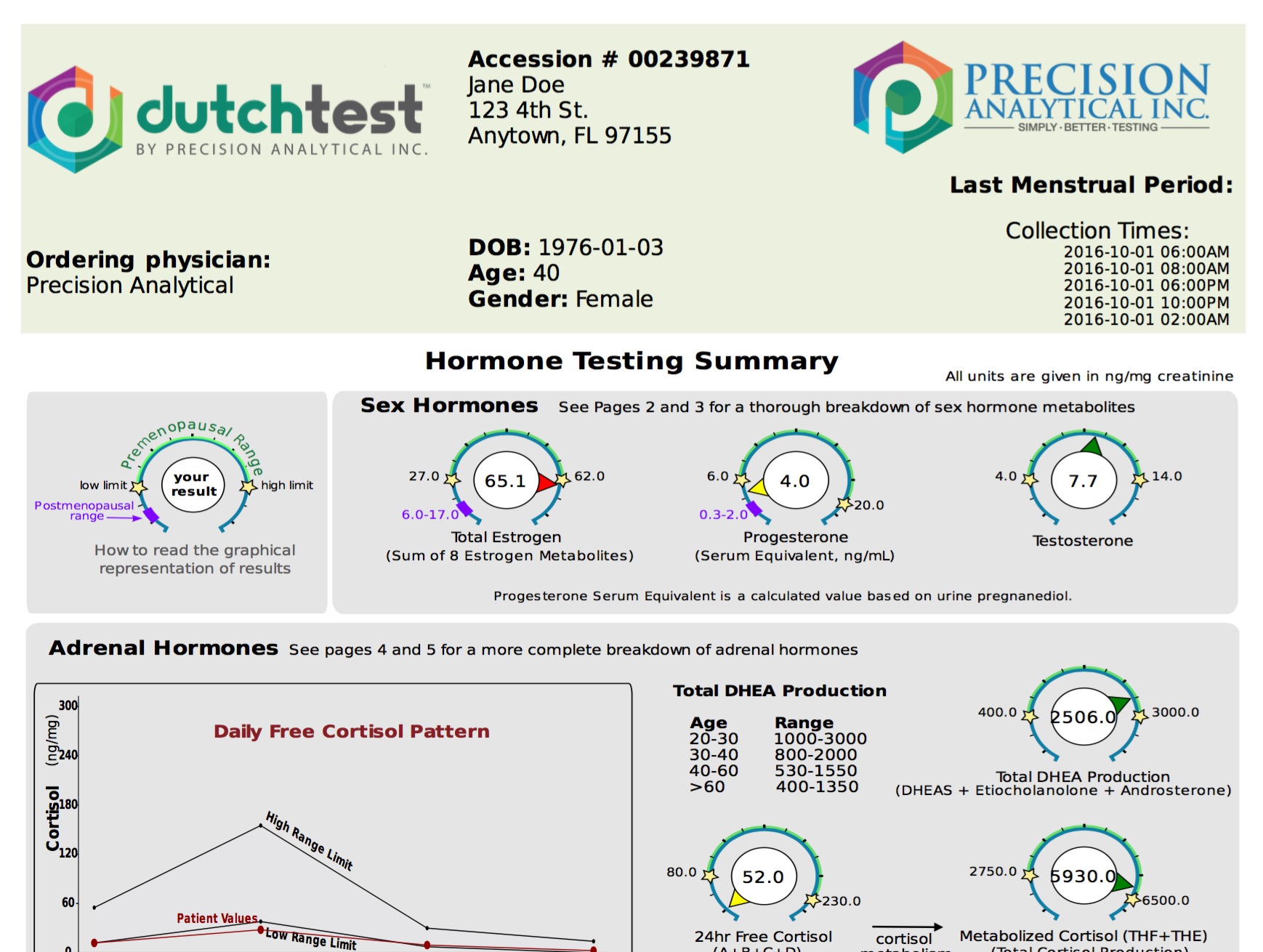
This is where the DUTCH test can be helpful. Not because it gives you a simple label, diagnoses menopause, or explains everything. But because it can provide a more detailed picture of how your hormones are being produced, metabolised and cleared, alongside your daily cortisol pattern.
For many midlife women, that can be a useful starting point for a more personalised nutrition and lifestyle plan.
What is the DUTCH test?
DUTCH stands for Dried Urine Test for Comprehensive Hormones.
Instead of relying on a single blood sample, the DUTCH test uses dried urine samples collected at different points across the day. These are analysed to look at sex hormones, hormone metabolites and cortisol patterns.
Depending on the panel used, the test may include information on oestrogen metabolites, progesterone metabolites, androgens such as testosterone and DHEA, cortisol and cortisone patterns, melatonin markers, and some nutrient or organic acid markers.
The reason this can be useful in midlife is that symptoms are not always explained by whether hormones are simply “high” or “low”. Sometimes the more useful question is: what is your body doing with those hormones?
For example, two women may both have symptoms of oestrogen fluctuation, but their patterns may look quite different. One may have signs of lower progesterone output. Another may show a pattern that suggests less favourable oestrogen metabolism. Another may have a disrupted cortisol rhythm affecting sleep, energy, cravings and resilience.
Why not just do a standard blood test?
Standard blood testing absolutely has its place. It can be important for assessing thyroid function, iron status, B12, folate, vitamin D, inflammation, glucose regulation, cholesterol, and liver and kidney function.
When it comes to diagnosing perimenopause or menopause, however, UK guidance is clear that women over 45 with typical symptoms are usually diagnosed based on symptoms, not hormone testing. Hormones such as FSH and oestradiol can fluctuate significantly during perimenopause, so a single blood test may not give the full picture.
So, the DUTCH test should not be seen as a menopause diagnosis test.
Instead, I see it as a functional hormone insight tool. It can help us explore patterns that may be relevant to how you feel, especially when considered alongside your symptoms, health history, diet, lifestyle, cycle pattern, medications, stress load and other markers. For example:
Oestrogen metabolism
Oestrogen is not just produced and then switched off. It has to be metabolised and cleared from the body.
The DUTCH test looks at different oestrogen metabolites, which can give insight into how your body is processing oestrogen. This may be relevant for women with symptoms such as heavy periods, breast tenderness, cyclical headaches, PMS-type symptoms, bloating or worsening perimenopausal symptoms.
From a nutrition perspective, this may guide support around fibre intake, cruciferous vegetables, gut health, alcohol reduction, protein adequacy and overall metabolic health.
This does not mean “detoxing” in the trendy sense. Your body already has detoxification pathways. The question is whether you are giving those pathways what they need to work well.
Progesterone patterns
Progesterone may become more variable in perimenopause as ovulation becomes less consistent.
Lower or fluctuating progesterone may be relevant for women experiencing shorter cycles, heavier periods, premenstrual anxiety, poor sleep, night waking or feeling more emotionally reactive than usual.
The DUTCH test does not replace a full clinical picture, but it can give us useful information about progesterone metabolites and whether your symptoms fit with that pattern.
Cortisol rhythm
This is one of the areas I find most useful.
Many midlife women are not just dealing with changing sex hormones. They are also dealing with years of chronic stress, poor sleep, blood sugar swings and nervous system overload.
Cortisol should follow a natural rhythm. It is usually higher in the morning to help you wake up and gradually falls across the day so that you can wind down at night.
When this rhythm is disrupted, you may wake feeling unrefreshed, rely on caffeine to get going, experience afternoon energy crashes, feel wired but tired at night, wake around 3am, crave sugar or carbohydrates, feel less resilient to stress, or struggle to recover from exercise.
The DUTCH test can show the pattern of free cortisol and cortisone across the day, as well as cortisol metabolites. This is not about diagnosing “adrenal fatigue”, which is not a recognised medical diagnosis. It is about understanding stress physiology and using nutrition and lifestyle strategies to support better regulation.
Androgens
Androgens such as testosterone and DHEA can also change in midlife. For some women, this may be relevant to acne, facial hair, hair thinning or changes in body composition. For others, low libido, low motivation, low mood or reduced muscle strength may be part of the picture.
The DUTCH test can provide information about androgen metabolites, which may be useful when symptoms suggest that androgen balance could be involved.
What can you actually do with the results?
This is the most important question. Testing is only useful if it changes the plan.
With the DUTCH test, the goal is not to chase perfect hormone numbers. The goal is to understand your patterns and build a realistic plan around them.
Depending on your results and symptoms, we may focus on blood sugar balance, protein and fibre intake, gut health and regular bowel movements, plant foods to support oestrogen metabolism, alcohol and caffeine habits, sleep timing, stress resilience, strength training, food-first liver support, and supplements if appropriate.
We may also identify whether further GP blood testing or medical review would be helpful.
This is where the DUTCH test can be empowering. It can help move you away from guesswork and towards a more targeted plan.
Who might benefit from a DUTCH test?
The DUTCH test may be useful if you are a midlife woman experiencing symptoms such as worsening PMS, mood changes, heavy or irregular periods, breast tenderness, cyclical headaches, sleep disruption, fatigue, feeling wired but tired, low libido, midlife weight gain, brain fog, stress-related symptoms, or symptoms that do not seem to match standard blood test results. Or for post-menopausal women who are still having symptoms. It can be taken whether or not you are on HRT (including the Mirena coil). But it is not so relevant if you are on the oral contraceptive pill.
It may also be useful if you have been told “everything is normal”, but you still do not feel like yourself.
Who does not need it?
The DUTCH test is not essential for everyone.
You do not need a DUTCH test to confirm that you are perimenopausal if you are over 45 and have typical symptoms. You do not need it before speaking to your GP about menopause symptoms, HRT or other medical options. And you do not need it if you are looking for an emergency answer to severe or sudden symptoms.
Please speak to your GP if you have very heavy bleeding, bleeding after sex, bleeding after menopause, unexplained weight loss, severe pain, new headaches, chest pain, significant depression, or any symptom that feels unusual or concerning.
As a Nutritional Therapist, I do not diagnose or treat medical conditions, and I do not advise on medication. My role is to help you understand how nutrition, lifestyle, stress, sleep, gut health and metabolic health may be influencing how you feel, and to work alongside appropriate medical care where needed.
The Annual Hormone MOT
If you feel as though your hormones, energy and resilience have changed in midlife, my Annual Hormone MOT has been designed to give you a deeper understanding of what may be going on.
It includes a DUTCH hormone test, one 75-minute consultation, and one 45-minute follow-up consultation.
We take a full look at your symptoms, health history, cycle patterns, diet, lifestyle, stress, sleep, digestion and goals. We then go through your results and create a clear, personalised nutrition and lifestyle plan.
This is not about handing you a complicated protocol or overwhelming you with supplements. It is about helping you understand your body and giving you practical, evidence-informed steps that fit into real life.
If you are ready to take a deeper look at your hormones, stress response and midlife health, my Annual Hormone MOT includes the DUTCH test and two personalised consultations. Click here to view the full details and book.

Please get in touch and find out more - I offer a free 30-minute exploratory call.


.png)










Copyright 2026 all rights reserved
Privacy Policy | Cookie Policy
Website by Phuse Media - Web Design Leigh on Sea
Photography by Petra Blacklock Photography

Please feel free to be in touch with our sister clinic which specialises in PCOS
Alex Allan Nutrition is part of the Green Leaf Company (London) Ltd, a limited company registered in England and Wales. Registered number: 10990293
Disclaimer: ‘Please note that nutritional therapy is not medical advice - this should always be sought from your doctor or other medical provider. I aim to work alongside your doctor or GP to provide nutritional and lifestyle advice to support any underlying imbalances.'
