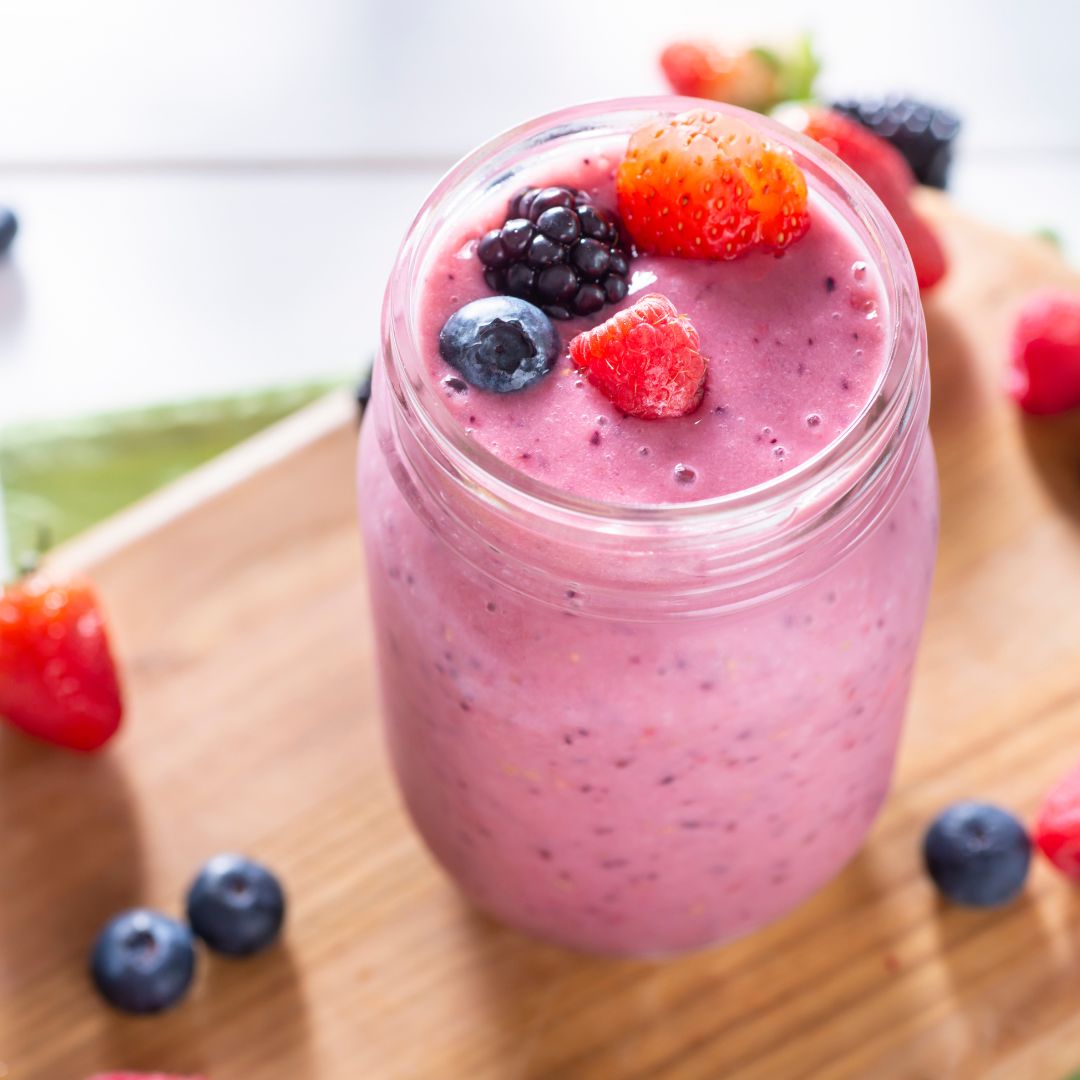
Summer Berry and Nut Smoothie
Fresh berries are one of the best things about summer. They are naturally colourful, require very little preparation and provide vitamin C, fibre and a wide range of plant compounds.
However, a smoothie made from fruit and juice alone may not keep you satisfied for very long. This version combines berries with protein, fibre and healthy fats to create a more complete breakfast or post-exercise option.
It is thick, creamy and not overly sweet, with no fruit juice, syrups or flavoured yoghurt required.
Why Berries Support Skin Health
Berries contain polyphenols, including the anthocyanins responsible for many of their deep red, blue and purple colours.
Anthocyanins and other polyphenols are being studied for their interactions with antioxidant defence, inflammatory signalling, vascular function and the gut microbiome. Human research has linked berry consumption with favourable effects on several cardiometabolic markers, although outcomes depend on the type and quantity of berries, the study population and the wider diet.
And their real advantage is that they make it easy to add several useful nutrients and plant compounds to an everyday meal.
Strawberries and blackcurrants are particularly rich in vitamin C. Vitamin C contributes to normal collagen formation for the normal function of skin and contributes to the protection of cells from oxidative stress. Collagen is one of the main structural proteins in the skin. The body needs vitamin C alongside amino acids from dietary protein to form and stabilise collagen fibres.
Using a mixture of berries also increases dietary variety. Frozen berries are just as practical as fresh berries and allow you to make this recipe throughout the year.
Serves one
Ingredients
To serve, optional:
Method
Frozen berries will create a colder and thicker smoothie.
Protein and Fibre Additions
The yoghurt provides most of the protein in this recipe. Greek yoghurt will usually contain more protein than standard natural yoghurt, although the amount varies considerably between brands.
Unsweetened soya yoghurt is generally the most protein-rich plant-based alternative. Coconut yoghurt usually contains very little protein unless it has been specifically fortified or blended with another protein source.
For a higher-protein smoothie, particularly after resistance training or when appetite is low, you could add:
Choose a protein powder without added sugar, additives or preservatives. A simple whey or pea protein can work, depending on personal preference and tolerance.
The chia seeds, ground flaxseed, berries and nuts contribute fibre. Soluble and viscous fibres can slow the movement of food through the digestive system and may help moderate the glucose response to a carbohydrate-containing meal.
Easy Variations
You can explore the connection between digestion, the microbiome, acne, eczema and rosacea in Could Your Gut Be Influencing Your Skin?
Find more balanced breakfast and snack ideas in my recipe index.

Please get in touch and find out more - I offer a free 30-minute exploratory call.


.png)










Copyright 2026 all rights reserved
Privacy Policy | Cookie Policy
Website by Phuse Media - Web Design Leigh on Sea
Photography by Petra Blacklock Photography

Please feel free to be in touch with our sister clinic which specialises in PCOS
Alex Allan Nutrition is part of the Green Leaf Company (London) Ltd, a limited company registered in England and Wales. Registered number: 10990293
Disclaimer: ‘Please note that nutritional therapy is not medical advice - this should always be sought from your doctor or other medical provider. I aim to work alongside your doctor or GP to provide nutritional and lifestyle advice to support any underlying imbalances.'
