Can What You Eat Really Affect Your Sleep?
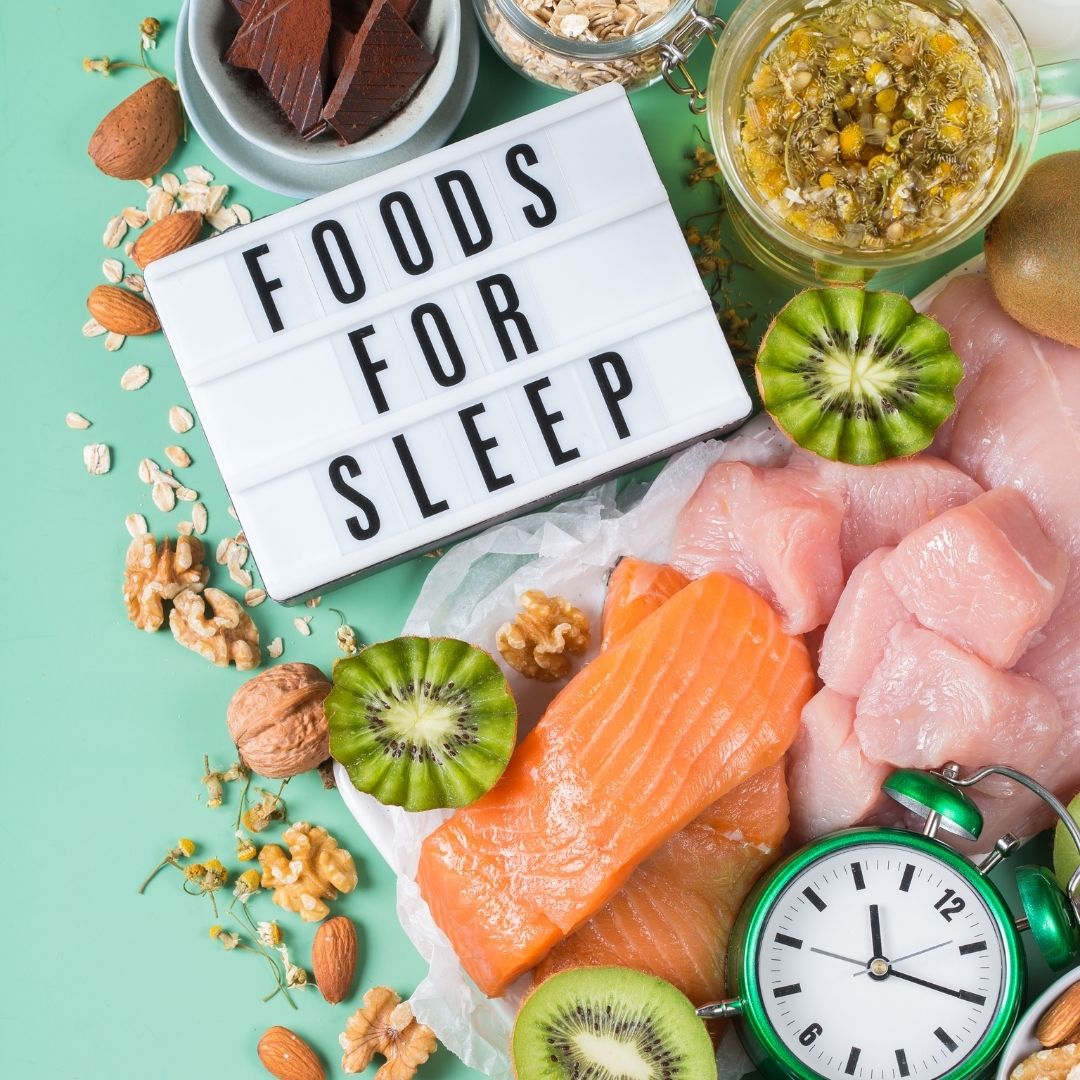
Magnesium before bed. Two kiwi fruit. Tart cherry juice. Turkey because it contains tryptophan. No carbs after 6pm.
Social media has no shortage of foods, drinks and supplements promising the perfect night’s sleep.
It is easy to see the appeal. If you are lying awake at 2am, the idea that adding one particular food to your evening routine might solve the problem is often more appealing than hearing that sleep is influenced by a complicated combo of biology, lifestyle, environment and health.
But can what you eat really affect how well you sleep?
The answer is probably yes, but not quite in the way Instagram would have us believe.
Sleep and Diet Influence Each Other
One of the difficulties with sleep research is that the relationship between food and sleep works in both directions.
What we eat may influence sleep, but how well we sleep can also affect what and how much we eat. Experimental research suggests that inadequate sleep can increase energy intake and alter eating behaviour. Think about the morning after a terrible night’s sleep. You may be more likely to reach for another coffee, crave quick-energy foods, and have less motivation to cook.
So, if people who eat a healthier diet also sleep better, we cannot automatically conclude that the food caused the better sleep. Perhaps people who sleep well also find it easier to eat well, exercise regularly and drink less alcohol. Often, the relationship probably works both ways.
Does Your Overall Diet Matter?
Increasingly, researchers are looking beyond individual “sleep foods” towards whole dietary patterns. One of the most studied is the Mediterranean diet, characterised by plenty of vegetables, fruit, pulses, wholegrains, nuts, seeds, extra virgin olive oil and fish.
A large 2025 systematic review and meta-analysis brought together 62 studies involving more than 328,000 people. Greater adherence to a Mediterranean-style diet was associated with better sleep duration and sleep quality. That sounds impressive, but there is an important caveat.
Much of this evidence is observational. It shows an association, but it cannot prove that following a Mediterranean diet caused people to sleep better. There was also considerable variation between studies.
Nevertheless, it is interesting that the dietary pattern already associated with wider cardiometabolic health also appears to sit alongside healthier sleep.
What About Tryptophan-Rich Foods?
Tryptophan is one sleep-related nutrient where there is more than just an interesting theory. It is an essential amino acid, meaning that we need to obtain it from food. Sources include eggs, fish, poultry, dairy foods, soy, pulses, nuts, seeds and oats.
Why might it matter? The chemical conversion pathway in the body looks roughly like this:
Tryptophan → 5-HTP → serotonin → melatonin
Tryptophan can be converted into 5-hydroxytryptophan, or 5-HTP, and then into serotonin, a neurotransmitter involved in mood and sleep-wake regulation. Serotonin can subsequently be converted into melatonin, one of the hormones involved in signalling biological night. There is a plausible biological connection between dietary tryptophan and sleep, which has been backed up by evidence.
A systematic review and meta-analysis found that tryptophan supplementation reduced wakefulness after sleep onset, particularly at intakes of 1g or more, although it did not significantly improve every sleep measure studied.
There is less research into tryptophan-rich foods and proteins but it is interesting. Studies of alpha-lactalbumin, a milk protein naturally rich in tryptophan, suggest potential effects on tryptophan availability and aspects of sleep, although trials remain relatively small.
There is one important complication, however. Tryptophan has to cross the blood-brain barrier, and it competes with several other large neutral amino acids for transport. This means that simply eating a huge portion of protein does not necessarily result in large amounts of tryptophan reaching the brain. Researchers therefore sometimes consider the ratio of tryptophan to competing amino acids, rather than tryptophan intake alone.
Where Does Vitamin B6 Fit In?
The pathway also depends on other nutrients. Vitamin B6, in its active form pyridoxal-5'-phosphate, is required for the conversion of 5-HTP into serotonin. The earlier conversion of tryptophan to 5-HTP also depends on other cofactors, including iron and tetrahydrobiopterin.
This does not mean that everyone with poor sleep needs a vitamin B6 supplement.
Instead, it reinforces a much more useful nutritional message: normal neurotransmitter pathways rely on an adequately nourished body, not on consuming one “magic” sleep nutrient in isolation.
Foods containing vitamin B6 include poultry, fish, potatoes, chickpeas, bananas and fortified cereals, so a varied diet will generally provide multiple nutrients involved in these pathways.
And what about the famous turkey dinner making everyone sleepy?
Turkey contains tryptophan, but so do many other protein foods. The post-Christmas-lunch slump is much more likely to reflect a combination of a large meal, alcohol, time of day and general festive exhaustion than a uniquely sedating effect of turkey.
Does Eating Late Affect Sleep?
Meal timing is another area where social-media certainty has raced ahead of the science.
You may have heard that you should never eat after 6pm or that eating close to bedtime disrupts your body clock.
The emerging field of chrononutrition examines how meal timing interacts with circadian rhythms. It is fascinating but still developing.
There are, however, practical reasons why a very large meal immediately before bed may not suit everyone. Reflux, indigestion and simply feeling overfull can interfere with sleep.
Rather than looking at a specific 6pm cut-off, look at your daily patterns. Aim to finish your evening meal at least 3 hours before going to bed – that way you will have properly digested that meal before lying down for sleep.
Caffeine Probably Matters More Than Most “Sleep Foods”
If we are talking about nutrition and sleep, caffeine deserves considerably more attention than fancy bedtime drinks.
A systematic review and meta-analysis of 24 studies found that caffeine reduced total sleep time by around 45 minutes on average. It also increased the time taken to fall asleep and reduced deep sleep.
Individual sensitivity varies enormously, so there is no perfect caffeine cut-off for everyone. But before spending money on a supplement designed to improve sleep, it is worth asking whether your afternoon coffee, strong tea, energy drink or pre-workout supplement might be quietly working in the opposite direction.
Alcohol: Sleepy Is Not the Same as Sleeping Well
Alcohol is another interesting example because it can make us feel drowsy. That initial sedation can easily be interpreted as better sleep.
However, a 2025 systematic review and meta-analysis found that alcohol altered normal sleep architecture, particularly REM sleep. Changes were detectable even at relatively low alcohol intakes and became more pronounced as intake increased.
So, although alcohol may make falling asleep feel easier for some people, sedation is not the same as restorative sleep. If you regularly wake during the night or feel unrefreshed in the morning, alcohol is worth considering as part of the picture.
What About Tart Cherry Juice?
Tart cherries contain small amounts of melatonin as well as plant compounds including anthocyanins, which has led to interest in their effects on sleep.
A 2025 systematic review found only seven intervention studies. Some reported improvements in measures such as sleep duration, efficiency or time taken to fall asleep, but studies differed considerably in the people involved, the dose and the length of the intervention.
So, my verdict would be: Interesting? Yes. Proven sleep remedy? No.
Tart cherry juice is also still fruit juice, so depending on the product and quantity it may provide a meaningful amount of free sugars, so ensure to drink it alongside a protein-containing meal.
Should We All Be Eating Two Kiwi Before Bed?
Kiwi fruit is another favourite of the sleep-hack world. A small study involving 24 adults with self-reported sleep difficulties found improvements after participants ate two kiwifruit an hour before bed for four weeks.
More recently, a 2026 review examining melatonin-containing foods, including cherries and kiwifruit, found potentially promising effects on sleep quality, duration and efficiency.
But the studies varied considerably in their methods, doses and populations. So, if you like kiwi, enjoy it. It is nutritious and contributes fibre, vitamin C and other plant compounds. But we are not yet at the point where two kiwis before bed should be prescribed as a treatment for insomnia.
What Should You Eat for Better Sleep?
Probably not a special “sleep diet”. If we step away from individual superfoods, a much more sensible picture emerges.
Eat adequately through the day and include a variety of protein foods, vegetables, fruit, wholegrains or other fibre-rich carbohydrates, healthy fats, pulses, nuts and seeds. Foods naturally containing tryptophan and the nutrients involved in serotonin metabolism can form part of that pattern without needing to become bedtime prescriptions.
Keep caffeine at a time of day that suits your individual sensitivity. Notice how alcohol affects you. Avoid evening meals that are so large or late that they leave you uncomfortable.
If sleep remains persistently poor, food may be one piece of the puzzle, but it is unlikely to be the whole picture. Stress, light exposure, activity, hormones, pain, medication and medical sleep disorders can all matter too.
Sometimes the best nutrition advice is knowing when nutrition is not the only answer.
If conflicting nutrition advice is leaving you unsure what actually matters, my approach is to look at the evidence, your wider health picture and the changes that are realistic for you. Why not book in a free health review?

Please get in touch and find out more - I offer a free 30-minute exploratory call.


.png)





Copyright 2026 all rights reserved
Privacy Policy | Cookie Policy
Website by Phuse Media - Web Design Leigh on Sea
Photography by Petra Blacklock Photography

Please feel free to be in touch with our sister clinic which specialises in PCOS
Alex Allan Nutrition is part of the Green Leaf Company (London) Ltd, a limited company registered in England and Wales. Registered number: 10990293
Disclaimer: ‘Please note that nutritional therapy is not medical advice - this should always be sought from your doctor or other medical provider. I aim to work alongside your doctor or GP to provide nutritional and lifestyle advice to support any underlying imbalances.'
